


Before you call, check two things about your yard.
If both are true, we'd love to talk. If not, keep reading. We'll be straight with you about your other options.
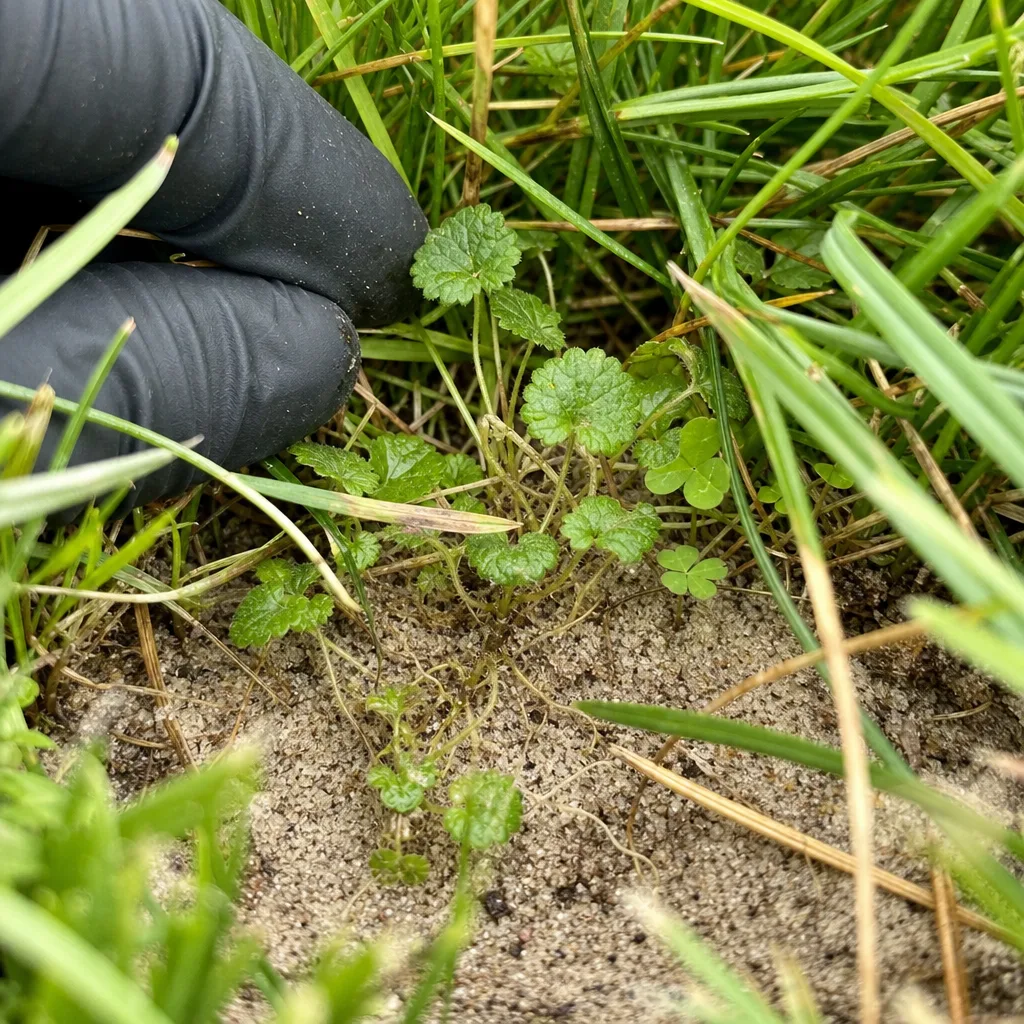
Weeds love thin, stressed grass. When a lawn dries out during a hot, dry stretch in July or August, the grass slows down and thins. That leaves bare gaps, and weeds like crabgrass and spurge move right in.
Steady water keeps your grass thick and growing. Thick grass shades the soil and crowds weeds out on its own. That's the best weed control there is. Treatments simply do better on a healthy, growing lawn than on a dry, stressed one.
Without reliable water, you can treat weeds and still watch them come back as soon as the grass struggles. We don't want you paying for results that won't stick.
Weeds don't all show up at once. Crabgrass sprouts in late spring. Dandelions bloom in spring and again in fall. Other weeds creep in during summer when the grass is under stress.
A one-time spray only handles what's growing that day. A yearly plan lets weed control work alongside the rest of your lawn care, so the grass fills in and keeps weeds from getting a foothold. Our lawn fertilization service is part of that bigger picture.
We hold a Commercial Pesticide License and a Minnesota Department of Agriculture fertilizer license. When you sign up, you're working with a licensed local team, not a guy with a sprayer and no paperwork.
If you don't have in-ground irrigation, you can still make real progress on your own.
That approach takes some sweat, but it works on a small yard. For a lot of people, it's all they need.
If you're thinking about adding an in-ground irrigation system down the road, keep us in mind for when it's in.
Call NowA lot of yards around Brainerd sit on sandy soil. If you've ever dug a hole for a fence post or a garden bed here, you've probably seen it. The ground is loose, light, and drains fast.
That fast drainage is great after a big storm. It's tough on grass the rest of the time.
Sandy soil doesn't hold water for long. A few warm, breezy days can dry out the top few inches, even when it rained earlier in the week. Grass roots feel that right away.
Sand also holds onto nutrients poorly. Food for your grass can wash down past the roots instead of staying where the grass can use it. So the lawn ends up hungry and thirsty at the same time.
Hungry, thirsty grass grows thin. And thin grass is exactly what weeds are waiting for, as we covered above.
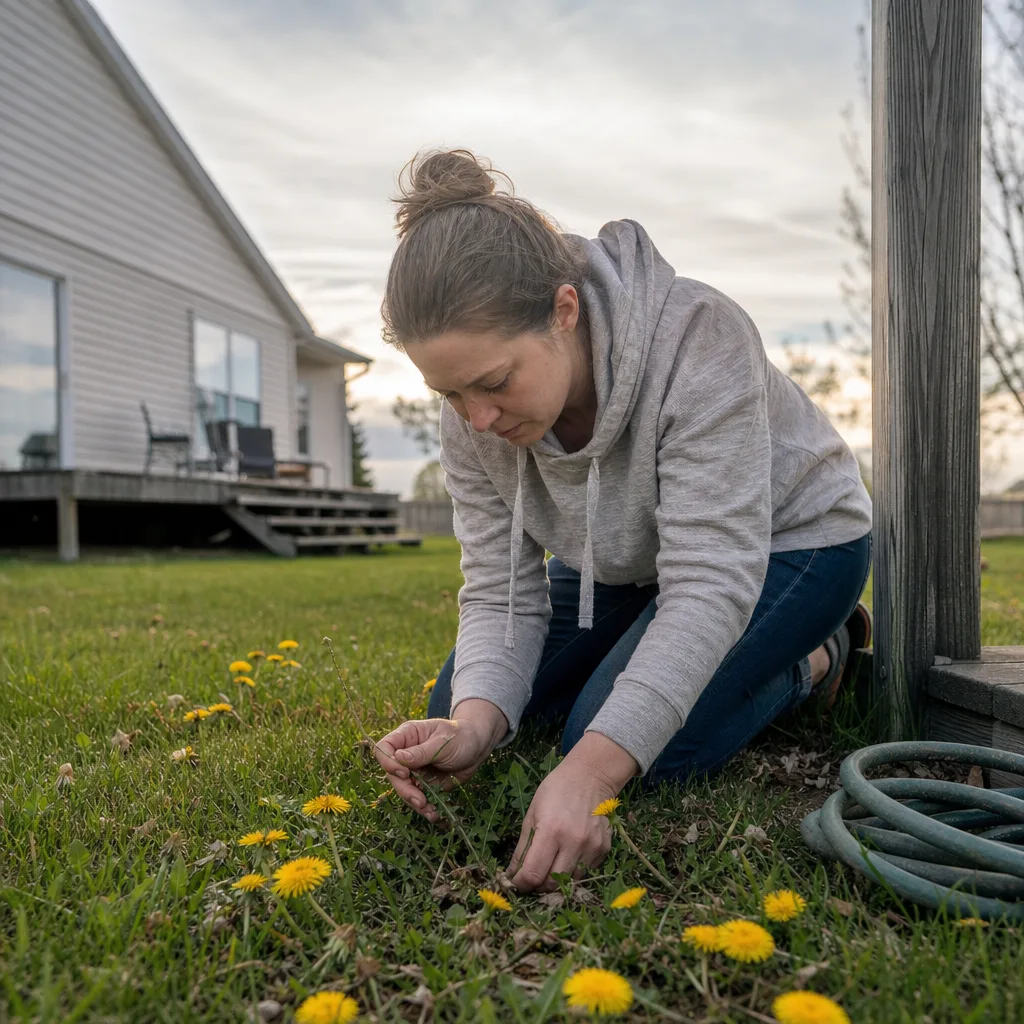
Some weeds like sandy, dry ground better than grass does. Here's what tends to take over when a sandy lawn starts to struggle:
These weeds aren't the real problem. They're a sign that the grass lost the fight for space.
Then there's the calendar. Up here, winter hangs on late and comes back early. Snow can sit on lawns well into spring, and the first hard frost isn't far off once September rolls around.
That leaves a short window for grass to grow, thicken up, and recover. It also leaves a short window for weed control to do its job.
Different weeds show up at different points in that window. If you miss the right moment for one of them, there's no long, mild fall to make up for it. You're often waiting until next year.
Further south, a lawn has months of extra growing time to bounce back from a rough patch. A Brainerd lawn doesn't get that cushion. Every week of the season counts a little more.
Put sandy soil and a short season together, and you can see why a quick spray here and there rarely holds up. The soil dries out fast, the grass thins fast, and the weeds move in fast. Then the season ends before the lawn can catch up.
That's the reason we set up weed control at JLC Turf Services the way we do. Steady water from an in-ground irrigation system keeps sandy soil from drying out between rains. A yearly turf plan keeps the grass fed and the weed timing on track through the whole short season, instead of chasing problems after they show up.
Thick, healthy grass is still the best weed fighter you've got. In sandy Brainerd soil, it just needs a little more steady help to stay that way.
Every lawn has a few weeds. A dandelion here and there isn't a crisis, and you don't need a plan for it. You just need a weeding tool and five minutes.
The question is whether your weeds are a one-off or a pattern. Here's what to look for when you walk your yard.
Pay attention to where the weeds are, too. That tells you a lot.
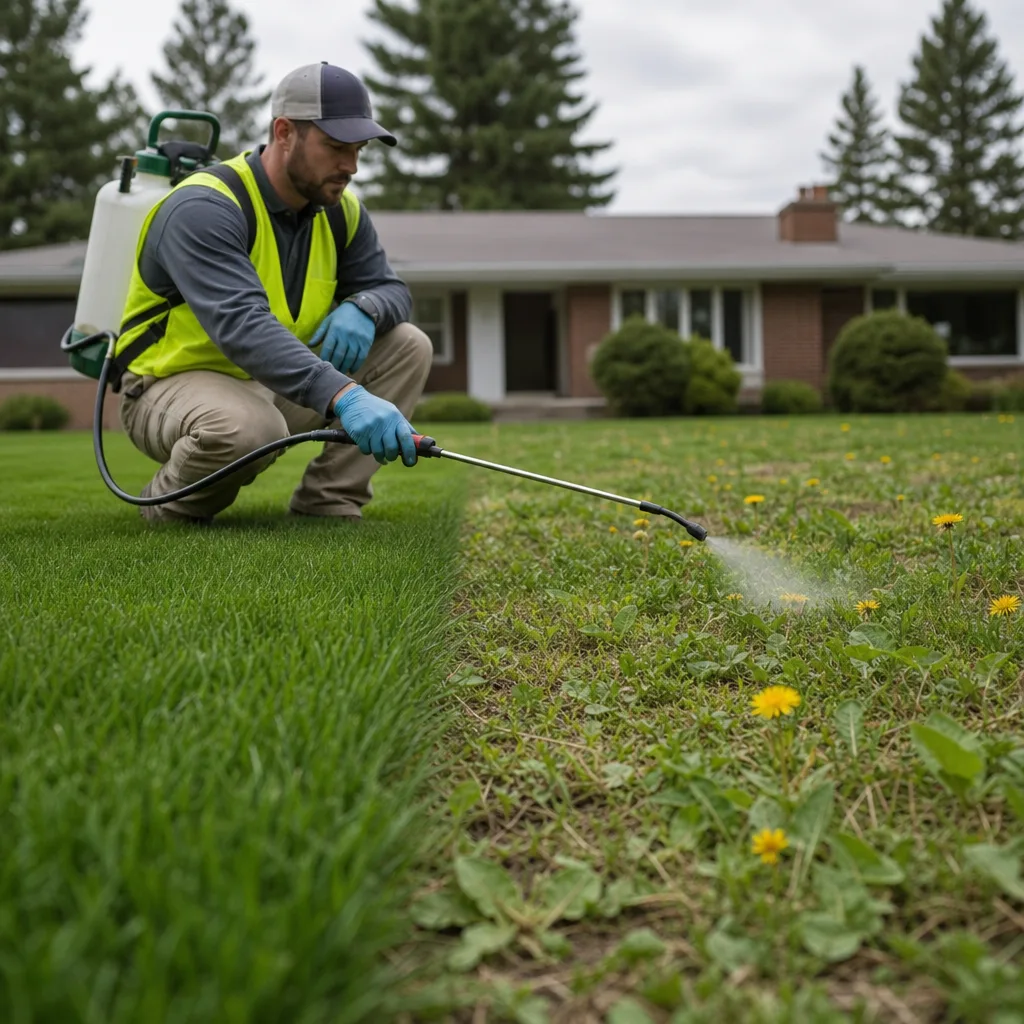
Weeds along the driveway, sidewalk, and street edge usually mean those strips are drying out and heating up faster than the rest of the yard. Weeds scattered across the middle of the lawn point to grass that's thin all over.
Shady spots under trees tell their own story. Grass struggles in low light, and low, creeping weeds can slowly take over where the turf gives up.
Color is another clue. Crabgrass often stands out as lighter green clumps in late summer, right when the rest of the lawn is looking tired. If your yard looks patchy and uneven by August, take a closer look at what's growing there.
Here's a simple test. Pick a spot about the size of a doormat in an average part of your lawn and count the weeds. A couple is normal. If you're losing count, or there's more weed than grass, your lawn needs more than spot pulling.
Watch for other trouble showing up alongside the weeds. Brown patches, spongy turf, or grass that peels up like carpet can point to grubs or disease. Those thin the lawn and open the door to even more weeds. We handle grub control and lawn disease treatment too, so it's worth mentioning what you're seeing when you call.
Keep the big picture in mind. Each of these signs points to the same thing. The weeds aren't the root problem. They're filling space your grass gave up.
That's why spraying what's there today doesn't fix it. If the grass doesn't get thick enough to hold its ground, new weeds will take the place of the old ones. Real weed control means treating the weeds and building up the lawn at the same time, all season long.
If you're seeing two or three of these signs at once, your lawn is telling you it's losing ground. That's the point where steady care beats another round of pulling.
Not every weed problem needs a plan right now. Sometimes the smartest move is to wait, and we'd rather tell you that than sign you up for something you don't need yet.
Here's when it's fine to hold off.
If one of those fits you, waiting is the honest answer. Keep mowing high, keep an eye on things, and check back when the timing's better.
Now for the other side. Some situations get harder and pricier the longer you let them go.
The first is a lawn that's clearly losing ground. If you're seeing two or three of the signs we covered above, waiting another season usually means more weeds and less grass to work with next year. Weeds that go to seed now become next year's weeds.

The second is sandbur. Those spiky burs hurt bare feet and get stuck in pets' paws and fur. If sandbur is showing up where your kids play or your dog runs, that's a good reason to get ahead of it instead of waiting.
The third is planning ahead of the season. Picture this. Last August, your yard was full of light green crabgrass clumps along the driveway. You told yourself you'd deal with it next year. Then spring shows up, and by the time you think about it again, it's already sprouting.
With our short growing season, the best time to plan is before the problem shows up, not after. Late winter and early spring are when it pays to get on the schedule, so nothing gets missed once the snow melts.
One more case is when weeds are only part of what you're seeing. If thin grass covers big areas of the yard, weed control alone won't fill it back in. Aeration and overseeding or a full lawn renovation might come first, and we can talk through which one makes sense.
So here's the simple version. A few weeds in a strong lawn can wait. A lawn that's thinning, spreading, or about to start a new season with last year's problems shouldn't.
Call NowIf you've got in-ground irrigation and a lawn that's losing ground, here's what you're signing up for.
Weed control with us isn't a single visit. It's part of our yearly turf plan, so it runs alongside the rest of your lawn care for the whole growing season. That's the point. The weeds get handled, and the grass gets the support it needs to hold its ground.

You'll know who you're working with. Jared Magstadt owns the business and handles everything outside, out on the lawns. Bob Magstadt is our office manager and takes care of the inside side of things. That's it. No call center and no guessing who to ask.
Licensing is a big part of why a program like this is different from grabbing a jug at the store. We hold a Commercial Pesticide License and a Minnesota Department of Agriculture fertilizer license. Weed products and fertilizer both need to be handled with care, especially in sandy soil where things can move down past the roots fast.
Cost works a little differently with a yearly plan than with a one-time spray. We don't list prices here, because every lawn is different. In general, a few things push the cost of any weed control program up or down.
Before you hire anyone for weed control, ours included, it's fair to ask a few straight questions. A good provider won't mind.
If a company can't answer those clearly, keep looking. You're trusting them with products on the grass your family and pets walk on.
The irrigation piece ties it all together. In a short Brainerd season with fast-draining sand, steady water is what keeps the grass growing between treatments. Without it, the grass thins and the weeds come right back. With it, every part of the plan has a much better shot at sticking.
So when you sign up, you're not buying a spray. You're getting a licensed local team, a plan that covers the whole season, and a lawn that's built up to crowd out weeds on its own.
Call NowCan I still get on a weed control plan if I don't have in-ground irrigation yet?
Not right away, since steady water is what makes treatments last. If a system is going in soon, it's worth waiting until it's running before starting a plan. In the meantime, hand pulling, mowing higher, and filling bare spots with seed can hold weeds back on a small yard.
Will weed treatment hurt grass I just seeded?
It can stress young grass, so it's best to wait until new seed is established. Talk it over before anything goes on a newly seeded area. Give tender grass time to root in first, then treatment can be timed around it safely.
What's the best time of year to start a weed control plan in Brainerd?
Late winter or early spring is the smart window to get on the schedule. Snow can sit on Brainerd lawns well into spring, leaving a short season to work with. Planning early means nothing gets missed once the snow melts and weeds start sprouting.

