Client Hub
A healthy, lush lawn benefits the environment. LEARN MORE


Fertilizing correctly makes a real difference in how your yard looks and performs. This guide explains timing, fertilizer types, and key nutrients so you get greener results with less guesswork. Many homeowners see patchy or thin turf from using the wrong products or poor timing — follow these steps to build stronger, more attractive grass that boosts curb appeal. We cover Minnesota timing, product choice, safe application, and essential nutrients.
Timing matters in Minnesota, where cold winters and short growing seasons affect when grass takes up nutrients. Apply fertilizer when the turf is actively growing for the best uptake and results.
For cool-season lawns plan at least two applications: a light feeding in early spring (mid April to early May) to restart growth after dormancy, and another in late summer to early fall (late August–September) to strengthen roots before winter. These windows align with the turf’s growth cycles and help the lawn store energy.
Fertilizing too early wastes nutrients; too late leaves turf unable to use them before frost. Match applications to active growth so the lawn absorbs nutrients and builds stronger roots.
No single fertilizer suits every yard — choice depends on soil, grass type, and goals. Below are common options and what they do well.
Organic fertilizers come from natural sources and improve soil structure over time, releasing nutrients slowly and reducing over feeding risk. Synthetic products supply nutrients quickly for fast greening but can harm soil life and increase runoff if overused. Many homeowners combine organics for soil health with synthetics for targeted corrections.
NPK — Nitrogen (N), Phosphorus (P) and Potassium (K) — are the primary turf nutrients. Nitrogen drives leaf growth and color; phosphorus supports root development and establishment; potassium improves stress tolerance and disease resistance. Choose a balanced NPK or follow soil test recommendations.
Research shows specific NPK ratios can help replace nutrients lost through mowing and leaching, keeping growth steady season to season.
Lawns lose nutrients over time through clipping removal, leaching and volatilization. To replace those losses and keep growth optimal, fertilizer applications are needed. For example, perennial ryegrass is often maintained with about 25–35 g/m² per growing season using an N:P:K ratio near 6:2:3. Regular soil and turf monitoring lets you adjust the program as conditions change.
Organic Fertilizer - Builds soil health, slow and steady nutrient release
Synthetic Fertilizer - Fast nutrient availability for quick greening
Slow-Release Fertilizer - Steady feeding over weeks to months; less leaching
JLC Turf Services provides turf programs and fertilizer treatments tailored to your grass type and local conditions so you get the right nutrients at the right time. We also offer specialized lawn grub control to protect against damaging pests.
When choosing a lawn-care approach, compare programs by quality, cost and real-world effectiveness to find what fits your yard and budget.
We compared aesthetic quality, biological control (weeds and insects), and economic cost across commercial, consumer, integrated pest management (IPM), organic, and untreated programs. The commercial program produced the highest lawn quality while untreated plots scored lowest. IPM and organic approaches delivered similar quality and both outperformed the typical consumer program. The consumer option was least expensive but gave the weakest weed control and lawn quality among treated lawns.
Comparative evaluation of aesthetic, biological, and economic effectiveness of different lawn management programs, DS Richmond, 2009
Choosing the right product is only half the job — correct application matters just as much. Apply carefully to avoid uneven color and burned spots.
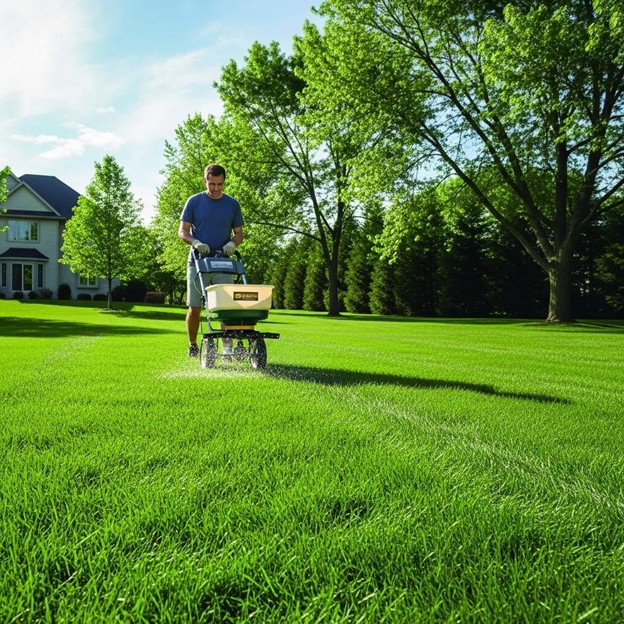
Use a broadcast or drop spreader for consistent coverage. Calibrate the spreader to the product label, apply when grass is dry to prevent clumping, and overlap passes to avoid striping.
Never exceed the label rate — over application causes burn and weak turf. Water lightly after spreading to move nutrients into the soil and reduce burn risk, and avoid applying before heavy rain to prevent runoff.
Good turf health depends on several nutrients, but a few are most important. Knowing their roles helps you pick the right fertilizer and schedule.
Nitrogen is the main driver of lush, green growth; it’s central to chlorophyll and leaf production. Too little yields pale, slow turf; too much produces rapid, weak growth prone to disease.
Phosphorus builds strong roots for establishment and recovery. Potassium improves tolerance to drought, cold and disease, making turf more resilient through seasonal stress.
Nitrogen - Drives leaf growth and green color
Phosphorus - Supports root development
Potassium - Improves stress and disease resistance
Use soil tests and observe your lawn to match products to needs — that keeps nutrient levels balanced and your turf looking its best through the season.
What are the signs that my lawn needs fertilization?
Look for pale or yellowing grass, thin or slow growth, and patchy areas. Increased weeds can also indicate nutrient deficiency. A soil test shows which nutrients are low so you can correct them precisely.
How often should I fertilize my lawn throughout the year?
It depends on grass type and product. For cool season grasses, plan two to four feedings, with early spring and fall as prime windows. Slow release products can reduce how often you must treat; always follow the label and local weather.
Can I fertilize my lawn during drought conditions?
Avoid fertilizing during drought. Stressed turf won’t take up nutrients well and may burn. Wait for rain or irrigate so grass is actively growing before you apply fertilizer.
What is the difference between granular and liquid fertilizers?
Granular fertilizers release nutrients over time and suit larger areas. Liquids act fast and are absorbed quickly but usually require more frequent applications. Choose based on how quickly you need results and your schedule.
How can I tell if I’m over-fertilizing my lawn?
Signs include very rapid growth, unusually dark green color, a spongy feel, or more disease problems. Runoff after rain suggests excess application. Stick to label rates and use soil testing to guide your program.
What should I do if my lawn has fertilizer burn?
Water the area deeply to dilute the fertilizer and help recovery. Pause further fertilizer until new growth appears. Severe burns may require reseeding once conditions improve. Careful measuring and following label rates prevents most burns.
With the right schedule, product choice and application technique, a lush, durable lawn is achievable. Follow these practical steps, watch soil tests and weather, and contact our team for tailored advice or professional treatments. Start today and enjoy a greener yard all season long.